


Laboratory Services
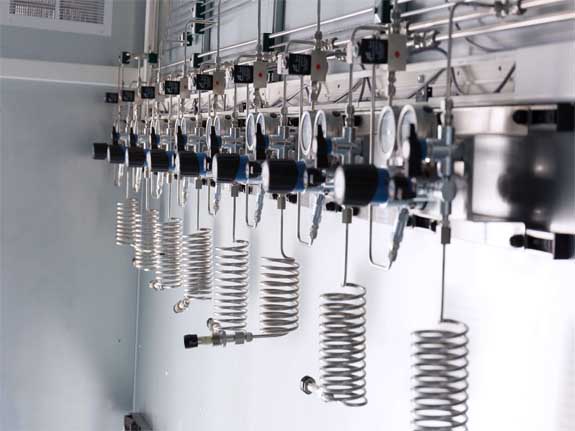
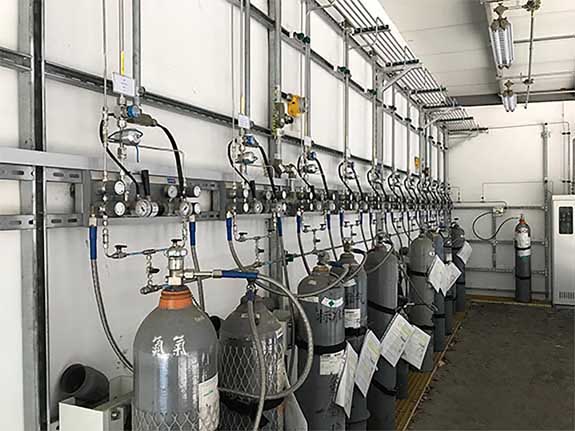
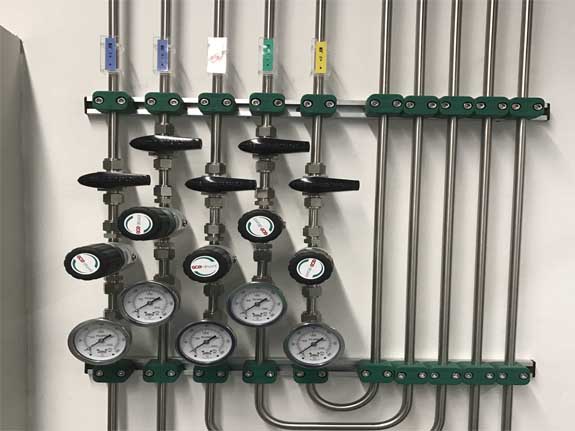
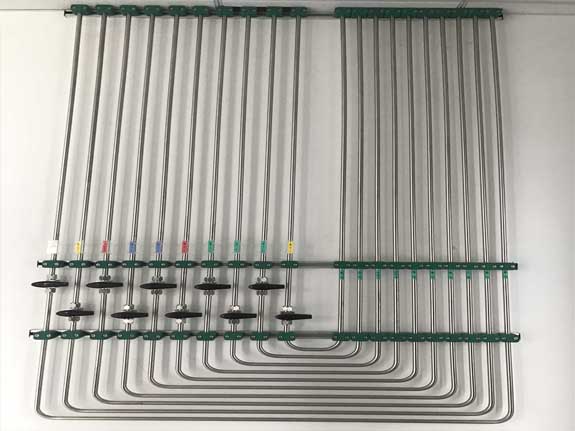
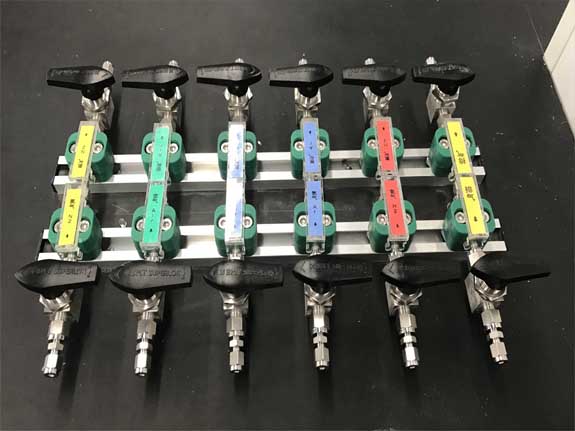
Laboratory gas mainly includes non-flammable gases (nitrogen, carbon dioxide), inert gases (argon, helium, etc.), flammable gases (hydrogen, carbon monoxide). Highly toxic gases (fluorine, chlorine); Composition of combustion-supporting gas (oxygen). Other gases, except non-flammable and inert gases, shall not be used in the laboratory. It can be connected to each laboratory through the air duct. General gas phase chamber is equipped with helium (He), nitrogen (N2). The gas chamber is equipped with nitrogen, hydrogen and oxygen. The connecting fittings of the hydrogen pipeline should be welded after connecting. Leakage is strictly prohibited. All pipelines must be tested for air tightness after installation and must be deoiled before use. Due to the small pipe and small pipe spacing, the installation process can be adjusted according to the situation on the spot to ensure the spacing is not less than 45mm. Flammable and explosive gas and inert gas are in the same cabinet when gas bottle is used, and two flammable gases are prohibited to be in the same cabinet. 1. In order to ensure safety, all kinds of gases used in the experiment should be stored away from the working point in the explosion-proof room if possible. Otherwise, the gas cylinder safety cabinet with automatic alarm function should be set for storage. 2. Negative pressure exhaust system shall be designed to ensure that toxic and harmful gases are not leaked in the room. According to the proportion of the room size, the corresponding number of ventilation fans with reverse wind valves should be designed to make the air flow smooth and keep clean. 4. Every room should be designed with air vent with filter device.